Notes
CFD Simulations Using Open-Source SU2 Code
CFD simulations provide a cost-effective means to explore aerodynamic behaviour around vehicles.
- SU2 (Stanford University Unstructured) is an open-source CFD code designed for solving compressible and incompressible flows on unstructured meshes.
- Comparison between CFD predictions and experimental (or analytical) results is a fundamental step in CFD research.
RAE 2822 Transonic Airfoil
Contributor: Geonwoo Kim (Nov 2025)
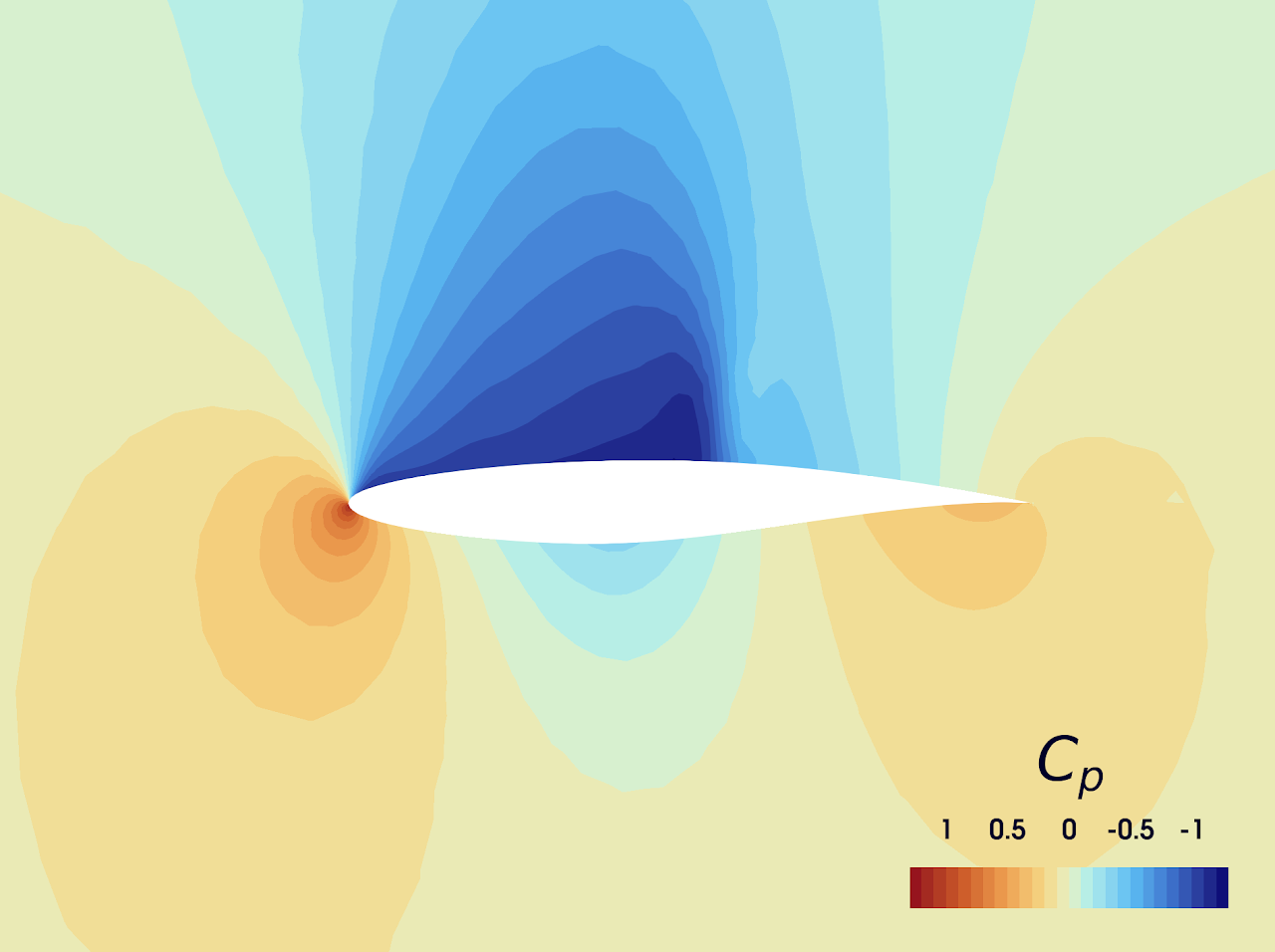
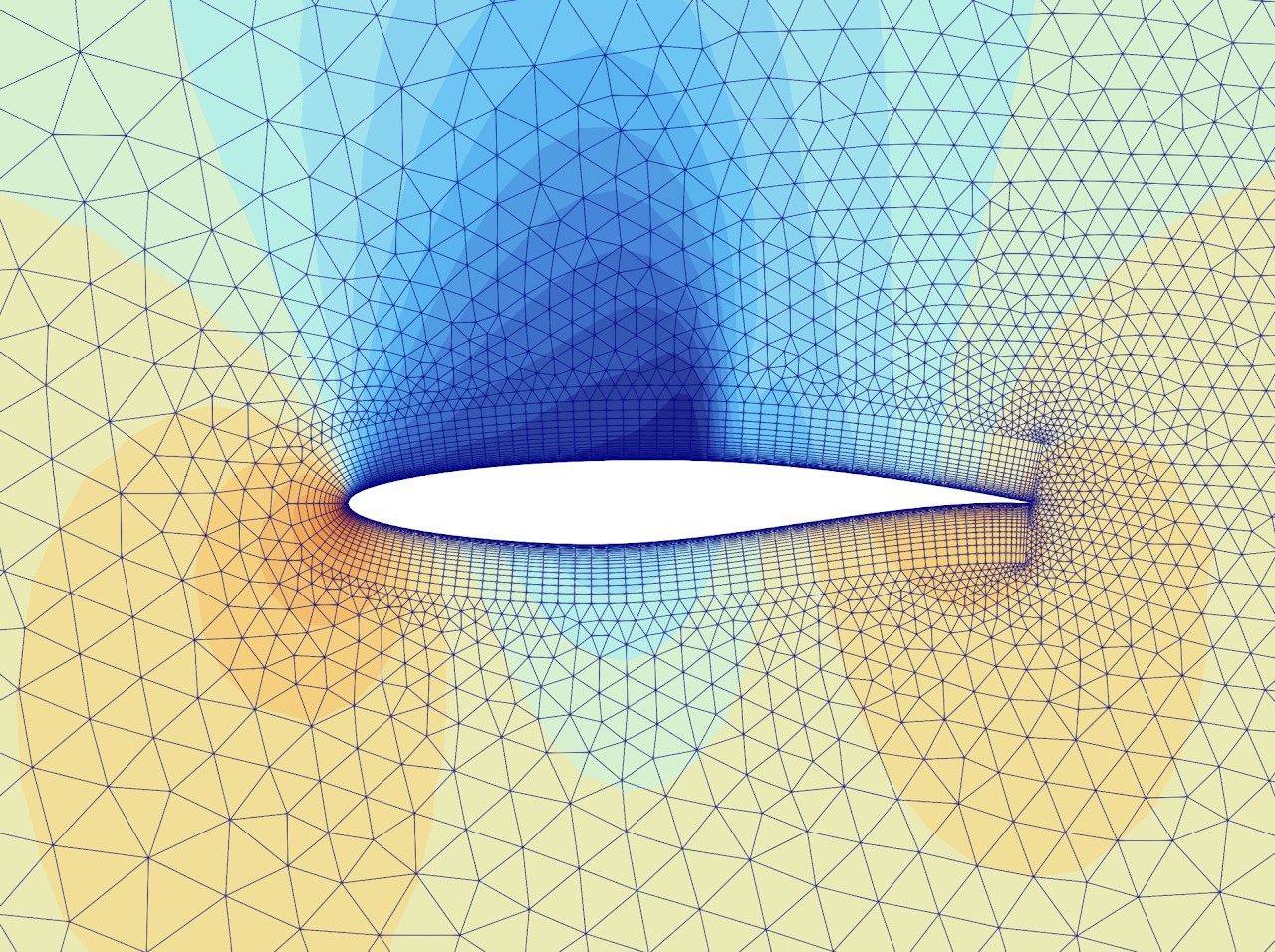
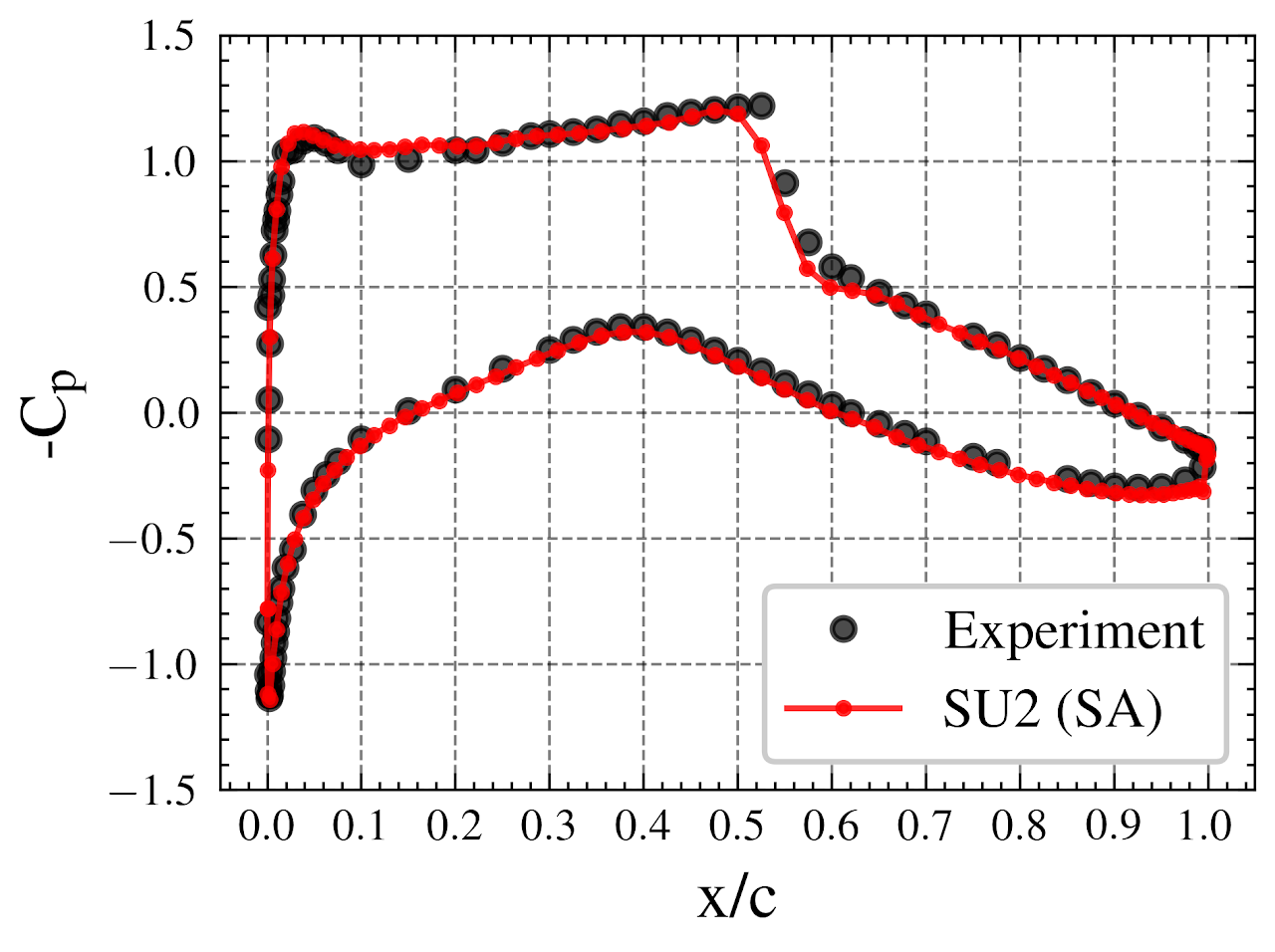
We consider the classical transonic flow problem over the RAE 2822 super-critical airfoil, widely used as a validation case for compressible turbulent CFD solvers (e.g., NASA GRC V&V archive).
- Geometry: 2-D airfoil section RAE 2822
- Transonic, featuring a shock–boundary-layer interaction on the upper surface of the airfoil.
- Typical free-stream: Mach 0.729, AoA 2.31 degree, Re 6.5 million.
Converging-Diverging Verification (CDV) Nozzle
Contributor: Junsang Yun (Dec 2025)
We consider the classical compressible flow problem through a converging–diverging nozzle, widely used as a verification case for isentropic and shocked nozzle flows in CFD solvers (e.g., NASA GRC V&V archive).
- Geometry: axisymmetric converging–diverging nozzle
- Throat area: 1.0 in² at x = 5 in
- Plenum total pressure: 1.0 psia
- Total temperature: 100 R
- Exit pressure ratio 0.89: subsonic isentropic
- Exit pressure ratio 0.75: supersonic with normal shock in diffuser
- Exit pressure ratio 0.16: fully supersonic isentropic
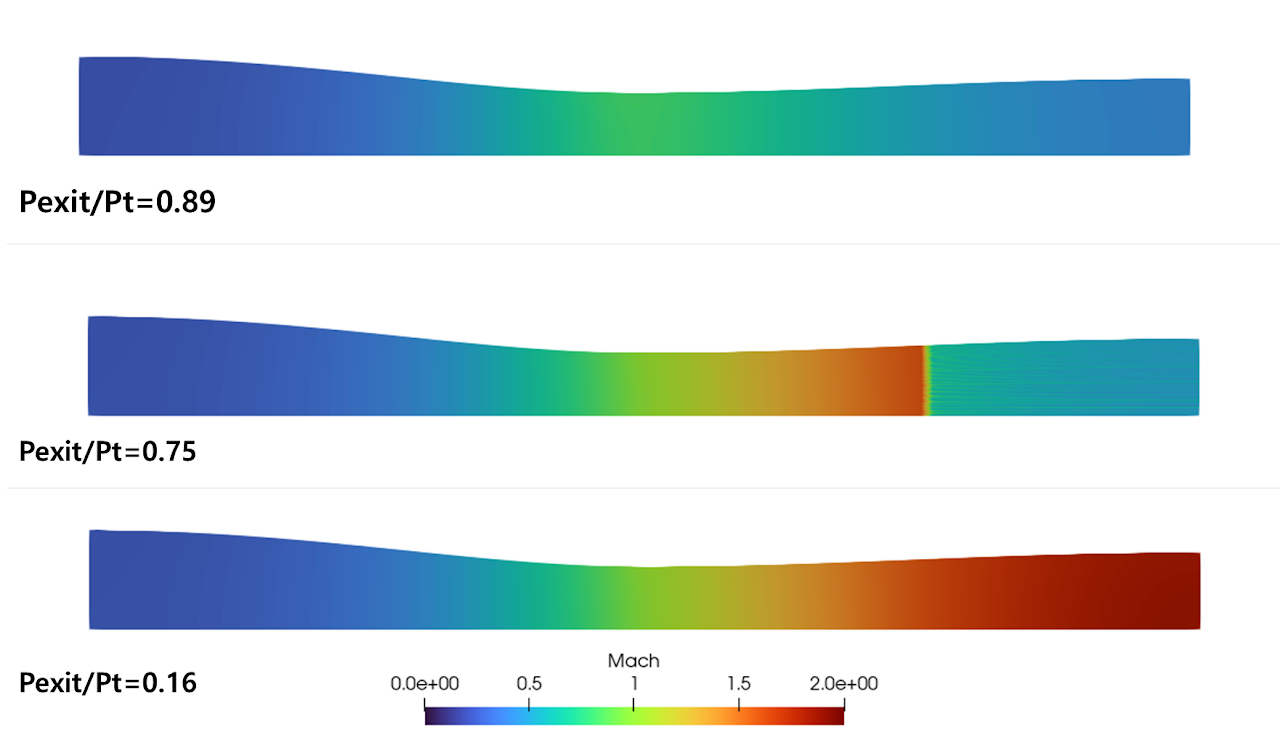
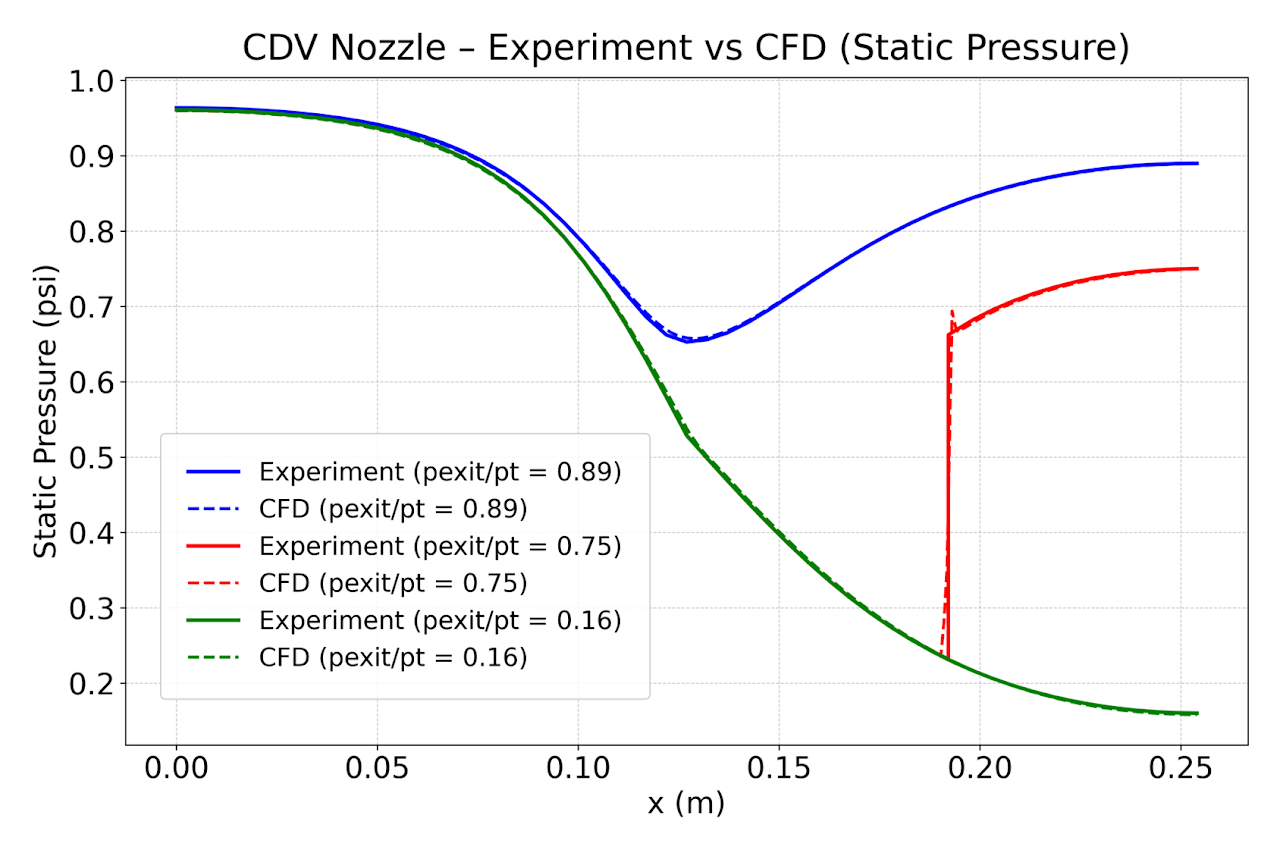
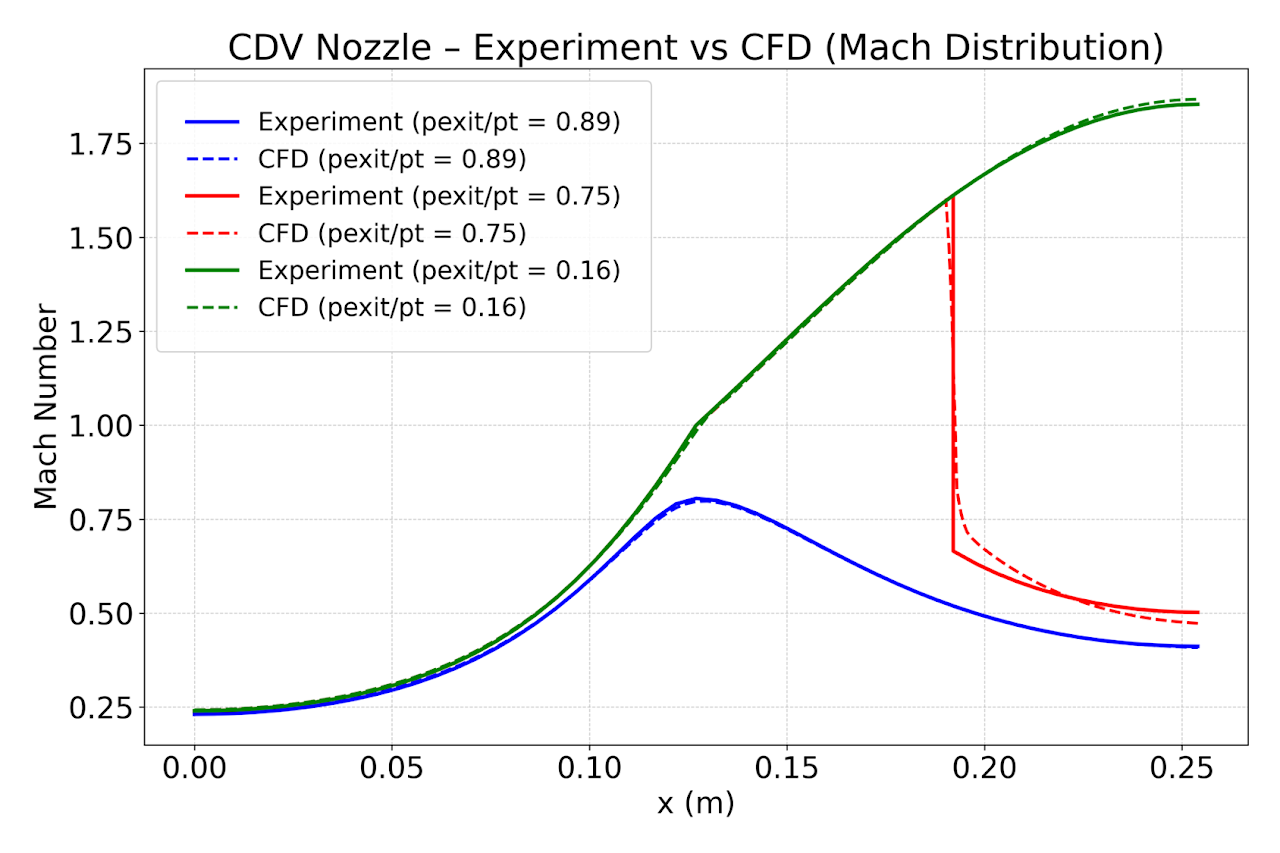
Sajben Transonic Diffuser
Contributor: Seunghyun Choi (Dec 2025)
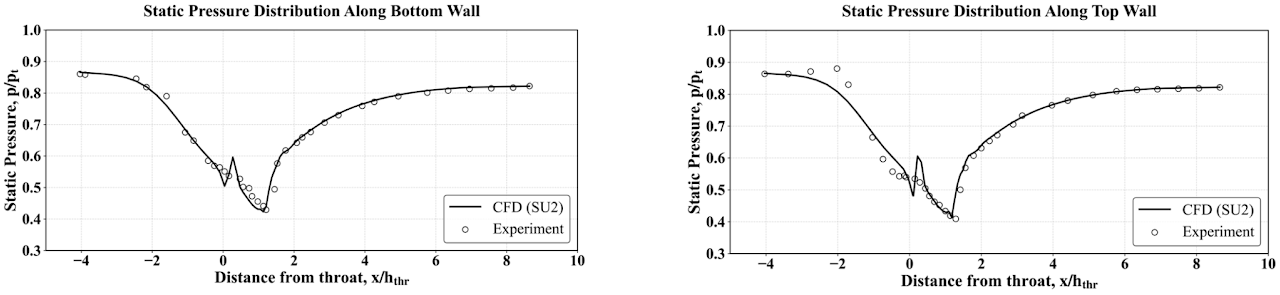
We consider the transonic flow through the Sajben converging–diverging diffuser, a standard validation case for internal shock behavior and comparison with well-documented experimental data (e.g., NASA GRC V&V archive).
- Geometry: 2-D converging–diverging diffuser
- Throat height: 0.14435 ft at x = 0
- Plenum total pressure: 19.58 psia
- Total temperature: 500 R
- Pexit = 16.05 psia: weak shock